
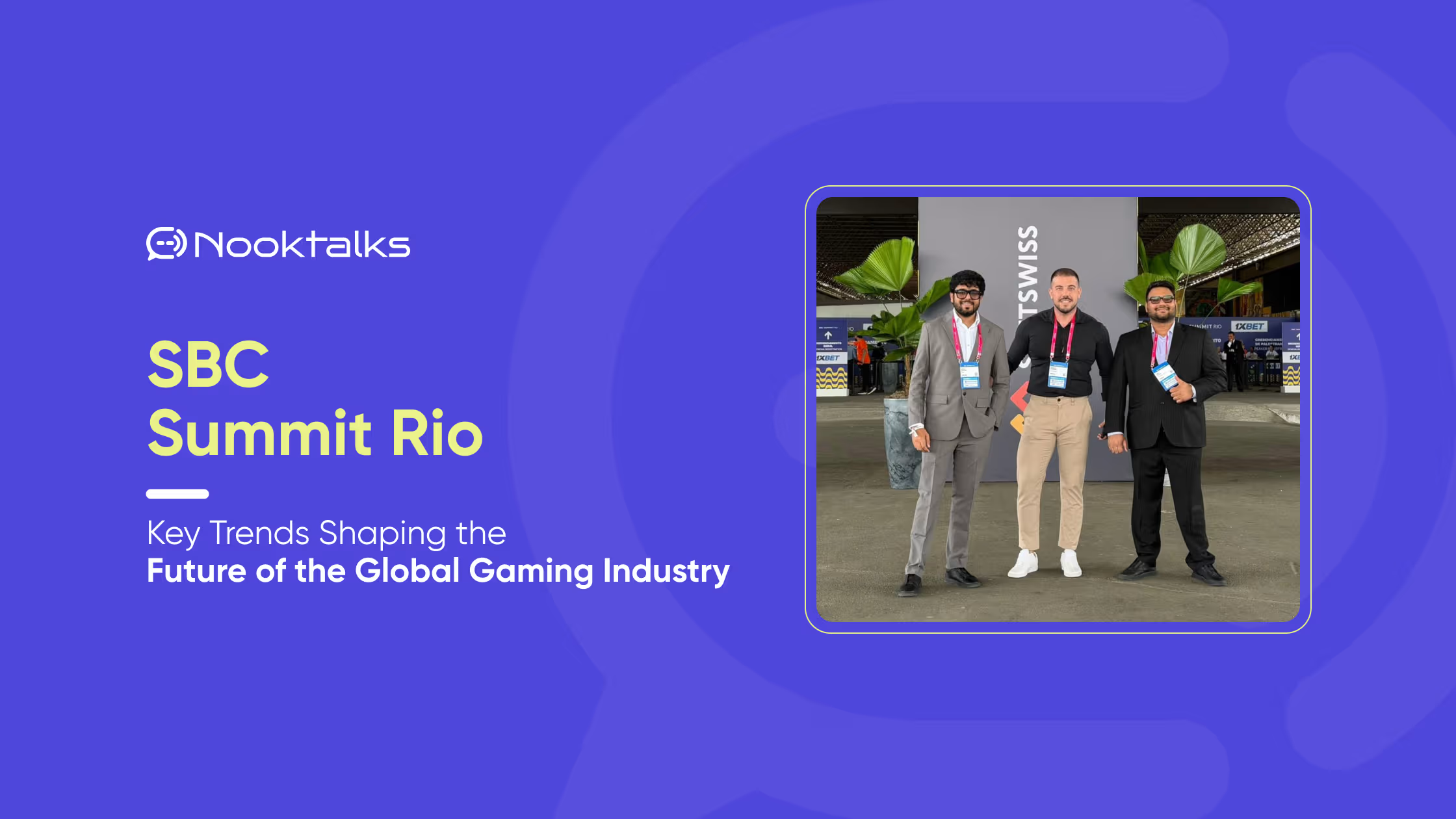
The global gaming and sports betting industries are experiencing a period of rapid transformation, driven by technological innovation, regulatory evolution, and the emergence of new high- growth markets. As companies look to expand their reach and refine their strategies, industry events have progressed critical platforms for collaboration, insight sharing, and partnership building. One such gathering that has quickly gained prominence is the SBC Summit Rio, which brings together operators, affiliates, marketing platforms, payment providers, and technology innovators from across the world.
The summit has positioned itself as a key meeting point for stakeholders interested in understanding the dynamics of the Latin American gaming market. With its combination of expert panels, networking opportunities, and business discussions, SBC Summit Rio offers valuable insights into the trends shaping the future of the global gaming ecosystem.
Latin America’ s Rapid Emergence as a Gaming Hub
One of the most widely discussed topics at SBC Summit Rio was the rapid rise of Latin America as a key region for gaming growth. Over the past few years, the region has witnessed a surge in digital adoption, supported by increasing internet access, smartphone penetration, and an expanding online entertainment culture.
Among the countries drawing the most attention is Brazil. As the country continues to develop its regulatory framework around sports betting and online gaming, it is attracting growing interest from operators, investors, and affiliate networks worldwide. The market’ s large population, strong sports culture, and rapidly digitizing economy establish it a particularly attractive opportunity for companies seeking long- term growth.
Beyond Brazil, markets such as Mexico, Colombia, and Argentina are also demonstrating significant potential. Each country offers unique opportunities, but they also appear with distinct regulatory environments and consumer behaviors. As a result, businesses looking to enter these markets must adopt localized strategies that align with regional preferences and compliance requirements.
The Expanding Role of Affiliate Marketing
Affiliate marketing continues to be a cornerstone of growth within the gaming industry. Operators rely heavily on affiliates and performance marketing platforms to attract new users, drive engagement, and optimize customer acquisition costs.
At SBC Summit Rio, discussions around affiliate marketing highlighted how the sector is evolving beyond traditional traffic generation. Today, successful affiliate partnerships are built on data transparency, advanced analytics, and long- term strategic collaboration.
Operators are increasingly seeking partners that can provide detailed insights into user behavior, campaign performance, and market trends. Accurate tracking, reliable attribution models, and robust fraud prevention mechanisms have transform essential components of the affiliate ecosystem.
As competition intensifies within the gaming sector, affiliates that can deliver high- quality traffic, compliance- ready marketing strategies, and measurable performance metrics are becoming invaluable partners for operators seeking sustainable growth.
Data and Technology Driving Industry Innovation
Another prominent theme across the summit was the growing influence of technology in shaping the future of gaming and marketing strategies. Companies are increasingly leveraging advanced analytics, artificial intelligence, and automation to enhance campaign optimization and improve user experiences.
Data- driven decision- making is becoming a fundamental requirement for gaming operators and marketing partners alike. Real- time insights allow companies to refine their marketing efforts, understand player behavior more effectively, and allocate resources more efficiently.
Additionally, technological innovation is playing a significant role in improving transparency and accountability across the ecosystem. Sophisticated tracking systems and marketing platforms are enabling stakeholders to measure campaign performance with greater accuracy, which in turn strengthens trust between operators and affiliates.
These advancements are also helping the industry address challenges such as ad fraud, traffic quality, and compliance monitoring— areas that are becoming increasingly critical as markets relocate toward stronger regulatory oversight.
The Importance of Localization in Emerging Markets
While Latin America is often discussed as a unified growth region, one of the key insights from SBC Summit Rio was the importance of understanding the diversity within the market. Each country has its own cultural nuances, regulatory frameworks, and player preferences.
Successful gaming companies recognize that localization is not just about translating content into different languages. It involves tailoring marketing strategies, payment methods, customer engagement approaches, and user experiences to align with local expectations.
For demonstration, sports preferences, payment habits, and digital consumption patterns can vary significantly from one country to another. Companies that invest in local expertise and market- specific insights are more likely to build meaningful connections with users and establish sustainable growth in the region.
This emphasis on localization also extends to partnerships. Collaborating with regional affiliates, technology providers, and marketing platforms allows operators to navigate complex markets more effectively.
Networking and Collaboration Across the Industry
Beyond the formal discussions and panel sessions, SBC Summit Rio also highlighted the value of in- person networking within the gaming industry. Events like these bring together stakeholders from different segments of the ecosystem, creating opportunities for collaboration and knowledge exchange.
Operators, affiliates, payment providers, and technology companies all play interconnected roles within the gaming value chain. Building strong relationships between these stakeholders is essential for driving innovation and creating effective solutions for user acquisition, compliance, and operational efficiency.
The summit provided an environment where professionals could explore new partnerships, share experiences from different markets, and discuss strategies for navigating the evolving regulatory landscape.
These interactions often supervise collaborations that extend well beyond the event itself, helping companies strengthen their global networks and identify new growth opportunities.
Looking Ahead: The Future of the Gaming Ecosystem
As the gaming industry continues to expand globally, events like SBC Summit Rio play a crucial role in shaping industry dialogue and highlighting emerging opportunities. The summit not only reflects the current state of the industry but also offers a glimpse into its future.
Several themes are likely to define the next phase of growth in the gaming ecosystem. These include greater regulatory clarity in emerging markets, increased adoption of advanced marketing technologies, and deeper collaboration between operators and affiliate networks.
Latin America will remain a region to watch closely as governments refine regulatory frameworks and digital adoption continues to accelerate. Companies that can adapt quickly to evolving market conditions while maintaining strong partnerships will be best positioned to succeed.
For the broader gaming community, SBC Summit Rio serves as a reminder that innovation, collaboration, and market insight are key drivers of long- term success. As the industry continues to evolve, gatherings like this will remain essential for connecting global stakeholders and shaping the strategies that define the future of gaming.
